Utah Sur-Ron laws
Updated July 2026 · Utah DLD, Utah Code, and Highway Safety Office guidance reviewed
Is a Sur-Ron street legal in Utah? Utah is cracking down on the fake-e-bike problem.
Utah may be the most important state in this batch because the state has been unusually direct about high-powered electric devices. If it goes over 20 mph without pedaling or exceeds 750 watts, Utah safety guidance says it is not an e-bike or e-scooter, even if the marketing page tries to do yoga around the word ‘bike.’
The Utah definition
Why Utah’s e-bike definition usually does not fit a Sur-Ron.
Utah’s electric-assisted bicycle definition is detailed. The bike needs no more than 750 watts, fully operable pedals, permanently affixed cranks installed at original manufacture, and the ability to operate as a bicycle without the motor.
Class 1 assists only while pedaling to 20 mph. Class 2 can use motor power without pedaling to 20 mph. Class 3 assists only while pedaling to 28 mph and has a speedometer. That is the legal e-bike lane.
A stock Sur-Ron-style e-moto usually fails that lane because of power, speed, throttle behavior, motorcycle-style design, and lack of normal bicycle operation. Utah is making this distinction very clear for parents and riders.
Utah e-bike lane
Class 1, 2, or 3 electric-assisted bicycle
750 watts or less, operable pedals, original cranks, bicycle functionality, and class-limited behavior.
Sur-Ron lane
E-motorcycle / high-powered device question
A stock Sur-Ron is better researched as a high-powered electric device or e-motorcycle than as a bicycle.
Common mistake
Marketing does not beat Utah’s rules
If it exceeds the e-bike limits, Utah safety guidance says it is legally not an e-bike or e-scooter even if marketed that way.
Why riders still want one
A Sur-Ron can still make sense when the use case is honest.
Utah is electric-two-wheeler paradise on paper: mountains, trails, campuses, suburbs, new developments, big families, and short trips everywhere. That also means the safety conversation is loud. A Sur-Ron can make sense in the right off-road or properly registered setting, but Utah is not the place to hand one to a teenager and call it a bicycle.
Low weight
Lightweight compared with full-size dirt bikes
The Light Bee-style platform is easy to move, store, load, and handle compared with many gas dirt bikes.
Quiet torque
Electric response is the appeal
Instant torque, low noise, and simple maintenance are exactly why riders cross-shop Sur-Ron, Talaria, E Ride Pro, Altis, and EKX.
Mod support
Big enthusiast ecosystem
Suspension, brakes, wheels, tires, batteries, controllers, displays, protection, and lighting upgrades make the platform highly customizable.
Pick the right riding lane
Still want the Sur-Ron look or feel? Separate performance, style, and legality.
Most shoppers comparing Sur-Ron-style bikes are really choosing between three jobs: off-road e-moto performance, moto-inspired e-bike style, or a commuter bike that is easier to explain on normal streets. Those are not the same job, and pretending they are is how the fun bike becomes the paperwork bike.
Performance and trails
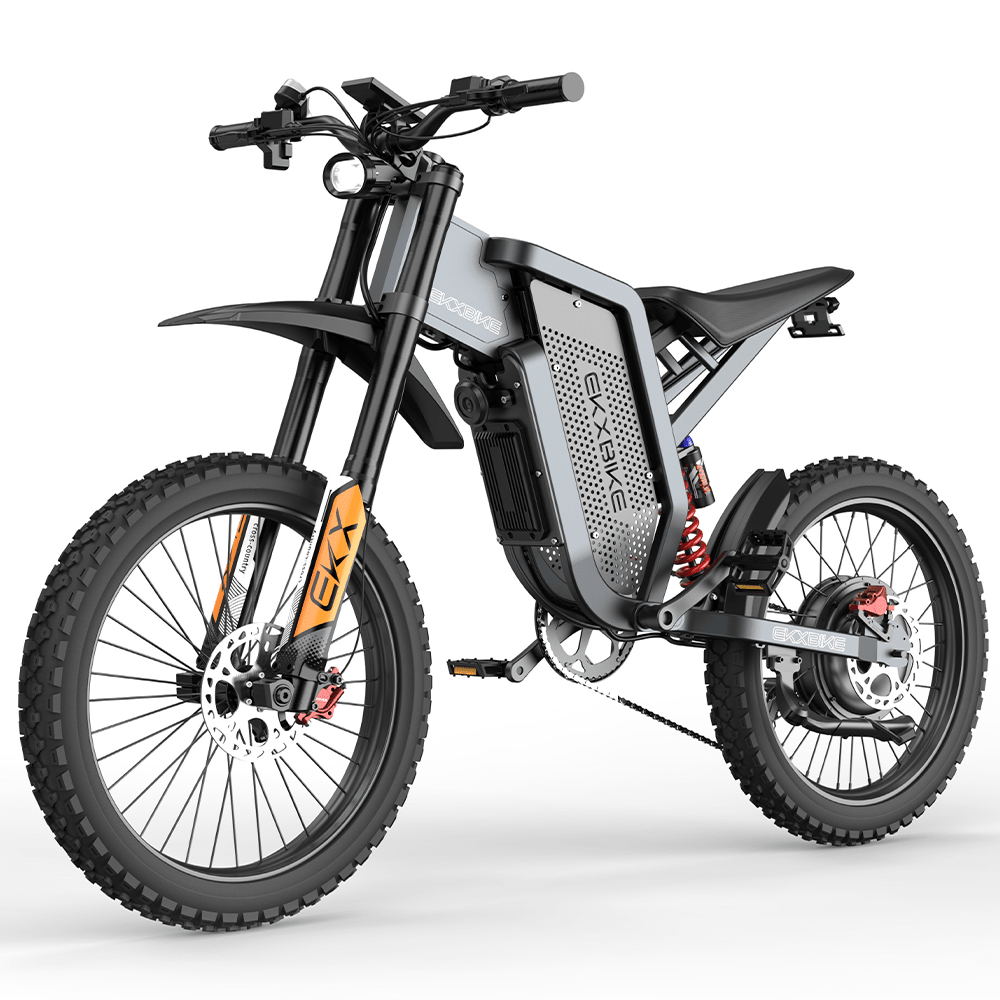
EKX X21 Max
For riders who mainly want the electric dirt bike experience. Treat it as a high-power off-road-style purchase first, then verify exactly where it can be used in Utah.
- Best match for performance-first shoppers
- Approach as an e-moto/off-road purchase
- Verify the exact trail, road, or property before riding

Moped-style middle ground
Ride1Up Revv1
A better bridge for shoppers who like moto styling but want pedals, published e-bike modes, and a more commuter-focused ownership path. Check the selected mode and local route rules.
- Moto-inspired look with functional pedals
- Clearer commuter path than an off-road dirt bike
- Check class mode before every route
Street-style starting point
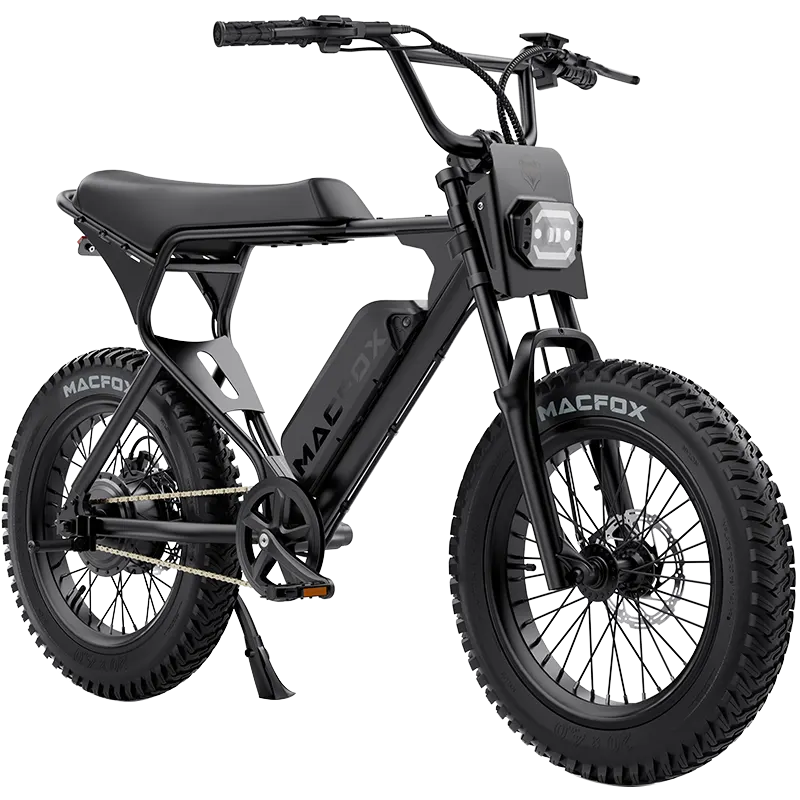
Macfox X1S
A more conventional moto-inspired option for riders who want the long-seat look without jumping into Sur-Ron-level output. Keep it in its factory-compliant setup and verify local rules.
- Better fit for neighborhood cruising and short commutes
- Closer to normal e-bike research than a high-powered e-moto
- Verify the exact class, speed setting, and route
Not sure which lane fits you?
Compare off-road e-motos, moped-style e-bikes, and conventional commuters before deciding.
Road-use requirements
Do you need a license, registration, and insurance for a Sur-Ron in Utah?
A compliant e-bike usually has a much simpler path than a motorcycle. A stock Sur-Ron starts outside that simple lane, so the road-use questions become paperwork questions: Can the exact VIN be registered? Can it be insured? Does the rider have the right license? And does the route allow that vehicle category?
License
Do you need a license in Utah?
A qualifying electric-assisted bicycle does not require a driver license or endorsement. Utah Highway Safety says high-powered devices and e-motorcycles require a driver license and motorcycle endorsement.
Registration
Can you register a Sur-Ron in Utah?
Only if the exact machine fits a valid road or off-road category. If it exceeds e-bike limits, verify license, registration, insurance, and equipment before public-road use.
Insurance
Do you need insurance?
A compliant e-bike is not the insurance lane. An e-motorcycle or high-powered road device is a different insurance and registration conversation.
Street conversion reality
What a street kit can improve—and what it cannot change.
Lights, mirrors, turn signals, brake lights, road tires, and a plate bracket can improve visibility. They can also make an off-road bike look more complete. What they cannot do is create missing road-vehicle certification, registration eligibility, insurance coverage, or license compliance.
VIN and paperwork
Start with the documents, not the parts cart
A bill of sale may prove you bought the bike. It may not prove the bike can be registered for public roads.
Road category
Pick the real legal category
Do not choose the easiest-sounding label. The bike has to actually fit the category you plan to use.
Insurance
Ask about the exact VIN
If an insurer cannot identify or cover the exact machine for road liability, treat that as a warning sign.
Equipment
Equipment comes after eligibility
Lighting and mirrors matter, but they are not a substitute for a valid registration path.
Local route
Check every segment
The route may include roads, bike lanes, paths, campuses, parks, bridges, sidewalks, or private property rules.
Best move
Verify before modifying
Make the phone calls and keep notes before spending money on a conversion that may still fail at the registration counter.
Interactive Utah check
Which Utah legal lane matches your plan?
Use this as a quick reality check before spending money. The final answer still depends on the exact bike, documents, local rules, insurance, and any DMV/tag/registration decision.
Where you can ride
Can you ride a Sur-Ron in Utah bike lanes, paths, parks, or on sidewalks?
This is where everyday riding gets messy. A route that feels harmless on a bicycle may be treated differently when the vehicle is a high-powered e-moto. Check the road section, the path section, the property rules, and the local enforcement climate.
Private property
Cleanest starting point
Owner permission is the simplest lane. Still check noise, charging, fire risk, neighbors, and whether motorized riding is allowed.
Off-road areas
Check land-manager rules
Utah has amazing off-road access, but each trail, OHV area, city, county, state, or federal land manager can set vehicle rules.
Public streets
License and category matter
If the machine is a high-powered device or e-motorcycle, Utah guidance points toward driver license, motorcycle endorsement, registration, and insurance requirements.
Paths and sidewalks
Age and local rules matter
Utah has public-property age restrictions for e-bike riders, and cities/counties can vary.
Youth riders
Utah is serious here
Under-8 riders may not operate e-bikes on public roads, paths, or sidewalks; under-14 riders need direct supervision; under-16 riders may not operate Class 3 e-bikes.
Helmet rules
New requirements apply
Utah Highway Safety says riders under 21 must wear CPSC helmets on roads for e-bikes/e-scooters, and DOT helmets for high-powered devices and e-motorcycles.
Stay updated
Want the Utah Sur-Ron and e-bike updates sent to you?
Laws, local enforcement, product specs, and bike deals move around. Get practical updates when new Utah riding guidance, price drops, or street-friendly bike picks go live.
Get Utah e-bike law and buyer alerts.
Useful updates only: state law notes, buyer guides, and bikes that fit the commute better than “I swear it’s basically a bicycle.”
No spam. Just RideStreetLegal updates, buyer guidance, and law-change notes. Unsubscribe anytime.
For streets, errands, and everyday transportation
If the route is the priority, these are easier Utah commuter conversations.
Some riders realize they want the Sur-Ron look more than they need Sur-Ron performance. A lighter city bike or compact folder can be easier to store, lock, service, and explain under normal e-bike rules.

Lightweight city bike
Ride1Up Roadster V3
Best suited to riders who want a normal bicycle feel, cleaner commuting profile, and easier apartment or garage handling.
- Natural city-bike feel
- Better fit for pavement and daily errands
- Much easier to explain than an off-road e-moto

Folding and utility
Ride1Up Portola
A practical alternative for trunks, compact storage, errands, RV travel, delivery setups, and apartment riders who want less drama.
- Folding frame and integrated utility setup
- Useful for apartments and limited storage
- Plan the class setting around the route
Which Macfox fits your plan?
Three moto-inspired Macfox options with different everyday strengths.
Macfox is relevant because its bikes keep some of the compact, moto-inspired style that attracts Sur-Ron shoppers, while staying closer to a factory e-bike ownership path. Still, the exact motor rating, configuration, speed setting, modifications, and local rules must match the route you plan to ride in Utah.
Best value starting point
Macfox X1S
The simplest Macfox recommendation for a rider who wants moto-inspired styling without moving into Sur-Ron-level output.
- Best for neighborhood cruising and shorter commutes
- Good fit for riders who want the style more than e-moto power
- Keep it in a compliant factory setup
Fat-tire stability
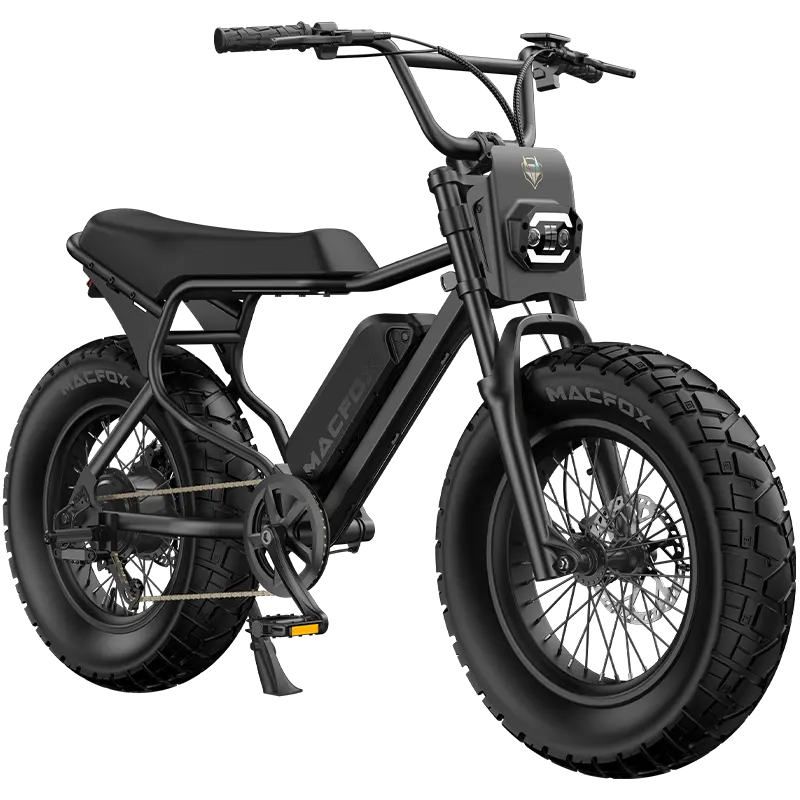
Macfox X7 / X7L
The better Macfox choice for riders who want wider tires, a more planted stance, and more visual presence than a skinny city commuter.
- Fat-tire stance for rougher streets
- Better visual match for moto-style shoppers
- Verify the exact class and local path rules
Most capable Macfox
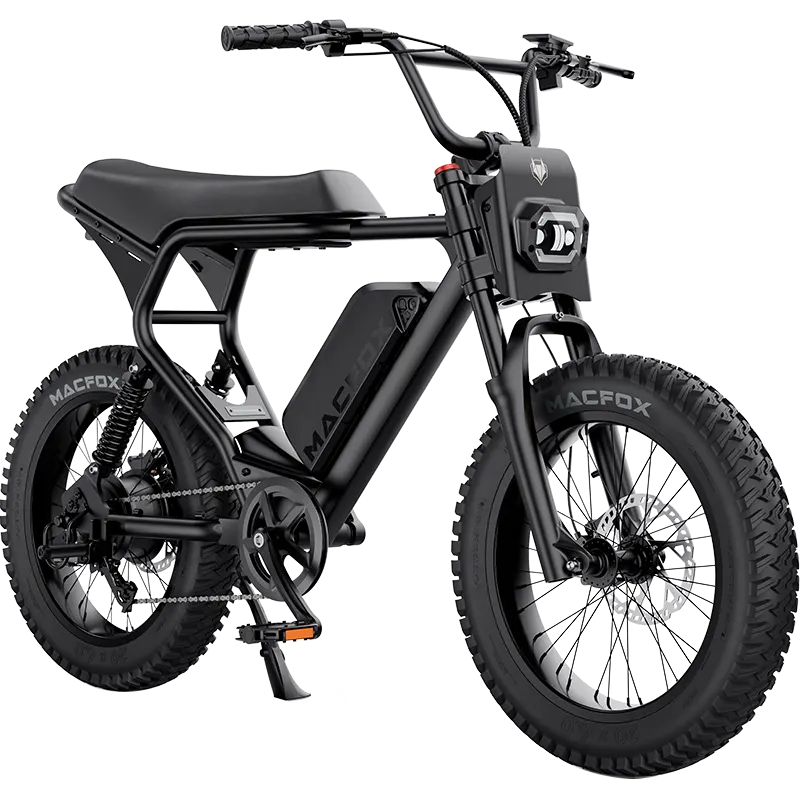
Macfox X2
The X2 is the more capable Macfox direction for riders who want comfort, suspension, and a stronger presence. Review the exact specs and local rules before buying.
- Best Macfox fit for rougher pavement and longer rides
- More capability means more reason to verify classification
- Do not modify beyond the legal lane for your route
Watch before you choose
Use videos for ride feel, then use this guide for the legal filter.
Videos help you judge size, posture, noise, acceleration, folding practicality, and real-world usability. They do not decide Utah legality, so use the visual context together with the classification notes above.
Off-road performance
Sur-Ron Light Bee X overview
Useful context for why the Light Bee belongs in the electric dirt bike conversation rather than the ordinary classed e-bike category.
Moto-style e-bike
Ride1Up Revv1 full review
Good context for riders who want moto styling with pedals and published e-bike modes.
Already own a Sur-Ron?
Buy gear for safety, security, and transport—not as proof of street legality.
Protective equipment and theft prevention are useful whether the bike is ridden on private property, transported to a legal riding area, or stored in a garage. None of this gear changes the vehicle’s legal classification.
Protection
Full-face helmet
At e-moto speeds, a casual city bicycle helmet is not the level of coverage I would choose.
Theft prevention
Heavy-duty lock and chain
A lightweight e-moto is valuable, recognizable, and relatively easy to move. Use more than a basic cable lock.
Recovery
Hidden tracker or alarm
A tracker cannot prevent every theft, but it adds another layer for garages, shared storage, and transport stops.
Disclosure: RideStreetLegal may earn from qualifying purchases through some links at no additional cost to you. Safety equipment and accessories do not change the legal classification of the bike.
FAQ
Questions I would answer before riding or buying one in Utah.
Is a stock Sur-Ron street legal in Utah?
Usually no. A stock Sur-Ron generally does not fit Utah’s electric-assisted bicycle definition because Utah e-bikes must have no more than 750 watts, operable pedals, original cranks, and Class 1/2/3 behavior.
Do Utah e-bikes require a driver license?
No. Utah DLD says qualifying electric-assisted bicycles can be operated without a driver license or endorsement.
What does Utah say about high-powered devices?
Utah Highway Safety says devices that go over 20 mph without pedaling or exceed 750 watts are considered e-motorcycles/high-powered devices, not e-bikes or e-scooters.
Can kids ride Class 3 e-bikes in Utah?
No one under 16 may operate a Class 3 electric-assisted bicycle under Utah DLD guidance.
What should I buy for Utah commuting?
A compliant Class 2 or Class 3 commuter e-bike is usually cleaner than trying to use a Sur-Ron as a daily road bike.
Official and product references
Sources for the Utah legal framework.
Utah Driver License Division e-bike definition, Utah Code path/operation rules, and Utah Highway Safety high-powered-device guidance reviewed.
- Utah Driver License Division — Electric-Assisted Bicycle
- Utah Code §41-6a-1115.5 — electric assisted bicycle operation
- Utah Highway Safety Office — E-Bikes Are Vehicles, Not Toys
- Utah outdoor recreation eMTB guidance
- EKX X21 Max official product page
- Ride1Up Revv1 product page
- Macfox road-focused collection