Minnesota Sur-Ron laws
Updated July 2026 · Minnesota statutes, DNR trail guidance, and OHV guidance reviewed
Is a Sur-Ron street legal in Minnesota? Not as a normal Minnesota e-bike.
Minnesota is a huge electric two-wheeler state in disguise: Minneapolis bike infrastructure, state trails, lakes, cabins, forest roads, delivery riders, and serious OHV culture. That mix is exactly why a Sur-Ron needs the right label before it hits the wrong trail.
The Minnesota definition
Why Minnesota’s e-bike rules usually do not fit a Sur-Ron.
Minnesota’s electric-assisted bicycle definition is specific. The bike needs a saddle, fully operable pedals, federal bicycle compliance, a motor output of no more than 750 watts, and qualifying class behavior.
That is a commuter e-bike framework, not a free pass for high-powered electric dirt bikes. A stock Sur-Ron-style machine usually fails the simple test before you even get to trail access.
Minnesota also separates electric-assisted bicycles from motorized bicycles, motorcycles, and off-highway motorcycles. That distinction matters on roads, state trails, public lands, and private riding areas.
Minnesota e-bike lane
Electric-assisted bicycle
Pedals, saddle, 750 watts or less, and Class 1/2/3 or multiple-mode behavior.
Sur-Ron lane
OHM / motorcycle question
A stock Sur-Ron is better researched as an off-highway motorcycle-style vehicle than as a bicycle.
Common mistake
Trail access depends on the category
State trail permission for e-bikes applies when the bike actually meets the electric-assisted bicycle definition.
Why riders still want one
A Sur-Ron can still make sense when the use case is honest.
Minnesota has a perfect mix of urban riding and off-road culture. A Sur-Ron can be fun for cabins, private land, and approved off-road areas. For everyday transportation, a compliant e-bike is usually a cleaner tool.
Low weight
Lightweight compared with full-size dirt bikes
The Light Bee-style platform is easy to move, store, load, and handle compared with many gas dirt bikes.
Quiet torque
Electric response is the appeal
Instant torque, low noise, and simple maintenance are exactly why riders cross-shop Sur-Ron, Talaria, E Ride Pro, Altis, and EKX.
Mod support
Big enthusiast ecosystem
Suspension, brakes, wheels, tires, batteries, controllers, displays, protection, and lighting upgrades make the platform highly customizable.
Pick the right riding lane
Still want the Sur-Ron look or feel? Separate performance, style, and legality.
Most shoppers comparing Sur-Ron-style bikes are really choosing between three jobs: off-road e-moto performance, moto-inspired e-bike style, or a commuter bike that is easier to explain on normal streets.
Performance and trails
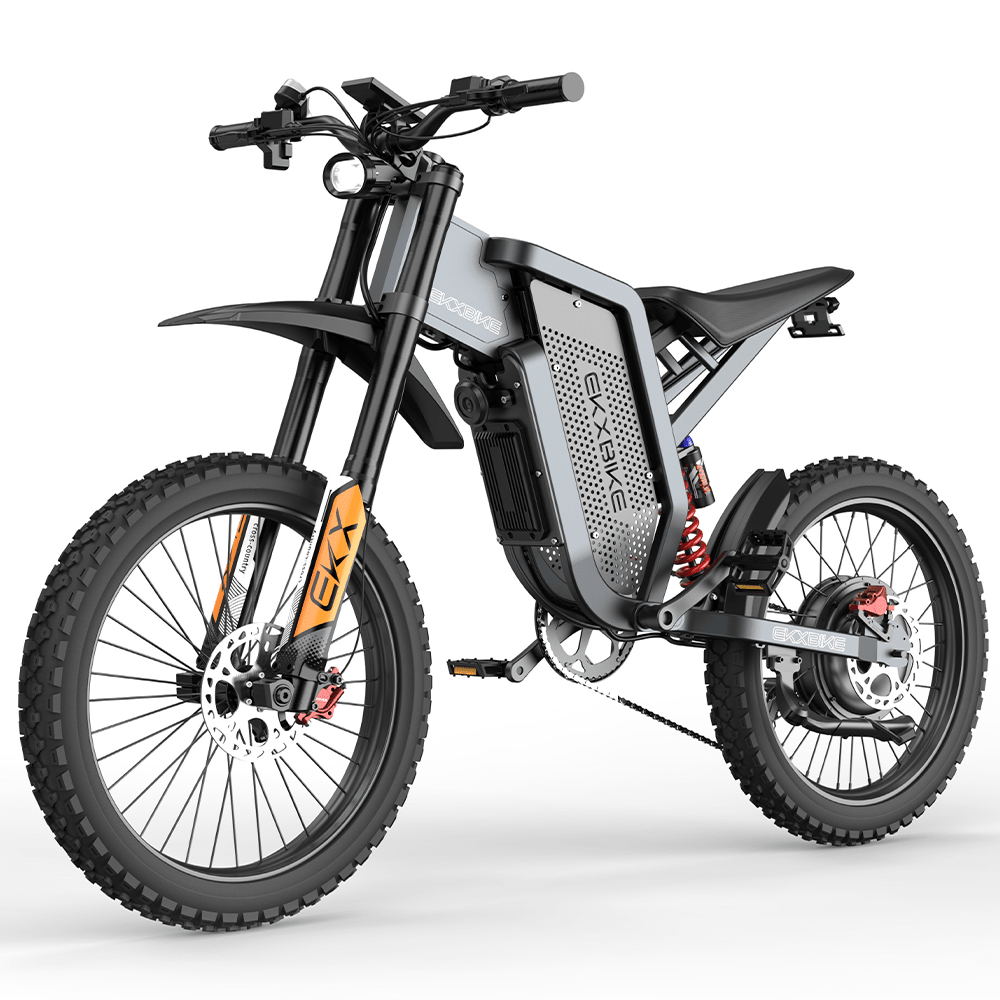
EKX X21 Max
For riders who mainly want the electric dirt bike experience. Treat it as a high-power off-road-style purchase first, then verify exactly where it can be used in Minnesota.
- Best match for performance-first shoppers
- Approach as an e-moto/off-road purchase
- Verify the exact trail, road, or property before riding

Moped-style middle ground
Ride1Up Revv1
A better bridge for shoppers who like moto styling but want pedals, published e-bike modes, and a more commuter-focused ownership path.
- Moto-inspired look with functional pedals
- Clearer commuter path than an off-road dirt bike
- Check class mode before every route
Street-style starting point
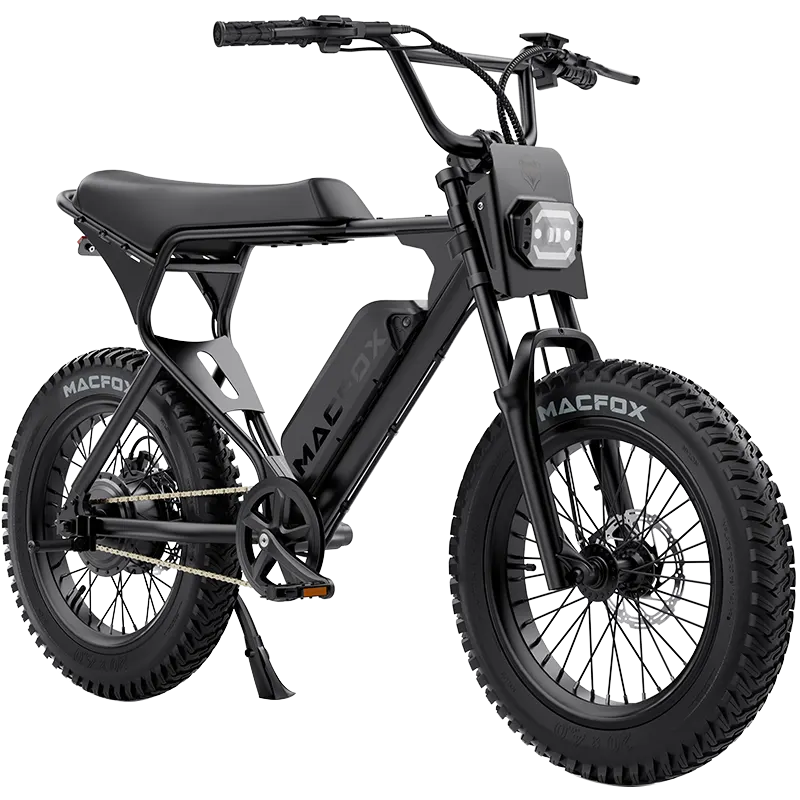
Macfox X1S
A more conventional moto-inspired option for riders who want the long-seat look without jumping into Sur-Ron-level output.
- Better fit for neighborhood cruising
- Closer to normal e-bike research
- Verify class, speed setting, and route
Not sure which lane fits you?
Compare off-road e-motos, moped-style e-bikes, and conventional commuters before deciding.
Road-use requirements
Do you need a license, registration, and insurance for a Sur-Ron in Minnesota?
A compliant e-bike usually has a much simpler path than a motorcycle. A stock Sur-Ron starts outside that simple lane, so the road-use questions become paperwork questions.
License
Do you need a license in Minnesota?
A compliant electric-assisted bicycle is not the motorcycle endorsement lane. Motorcycle road use is a separate licensing and equipment conversation.
Registration
Can you register a Sur-Ron in Minnesota?
Minnesota DNR registers OHMs for off-highway use, while road motorcycles follow motor-vehicle registration and endorsement requirements.
Insurance
Do you need insurance?
A compliant e-bike is not the motorcycle-insurance lane. A road motorcycle setup can involve registration, proof of insurance, endorsement, and safety equipment.
Street conversion reality
What a street kit can improve—and what it cannot change.
Lights, mirrors, turn signals, brake lights, road tires, and a plate bracket can improve visibility. They cannot create missing road-vehicle certification, registration eligibility, insurance coverage, or license compliance.
VIN and paperwork
Start with the documents
A bill of sale may prove you bought the bike. It may not prove the bike can be registered for public roads.
Road category
Pick the real legal category
Do not choose the easiest-sounding label. The bike has to actually fit the category you plan to use.
Best move
Verify before modifying
Make the calls and keep notes before spending money on a conversion that may still fail at the registration counter.
Interactive Minnesota check
Which Minnesota legal lane matches your plan?
Use this as a quick reality check before spending money. The final answer still depends on the exact bike, documents, local rules, insurance, and any agency decision.
Where you can ride
Can you ride a Sur-Ron in Minnesota bike lanes, paths, parks, trails, or on sidewalks?
This is where everyday riding gets messy. A route that feels harmless on a bicycle may be treated differently when the vehicle is a high-powered e-moto.
Private property
Cleanest starting point
Owner permission is the simplest lane. Still check noise, neighbors, safety, charging, and whether motorized riding is allowed.
OHM trails
Use the DNR rules correctly
Minnesota OHM riding can involve DNR registration, safety certification, helmet/eye protection, and trail-specific rules.
State trails
Only if it fits the e-bike definition
Minnesota DNR allows electric-assist bikes where normal bikes are allowed when they meet the definition.
Public streets
Road category required
If the machine is not a compliant e-bike, public-road use moves toward motorized bicycle or motorcycle rules.
Bike lanes and paths
For classed e-bikes
A stock Sur-Ron is not a Minnesota bike-path shortcut just because it is quiet.
Snowy storage season
Plan the boring stuff
Battery storage, theft prevention, charging safety, and corrosion protection matter more than most riders think.
Stay updated
Want the Minnesota Sur-Ron and e-bike updates sent to you?
Laws, local enforcement, product specs, and bike deals move around. Get practical updates when new Minnesota riding guidance, price drops, or street-friendly bike picks go live.
Get Minnesota e-bike law and buyer alerts.
Useful updates only: state law notes, buyer guides, and bikes that fit the commute better than “I swear it’s basically a bicycle.”
No spam. Just RideStreetLegal updates, buyer guidance, and law-change notes. Unsubscribe anytime.
For streets and everyday transportation
If the route is the priority, these are easier Minnesota commuter conversations.
Some riders realize they want the Sur-Ron look more than they need Sur-Ron performance. A lighter city bike or compact folder can be easier to store, lock, service, and explain.

Lightweight city bike
Ride1Up Roadster V3
Best suited to riders who want a normal bicycle feel and cleaner commuting profile.

Folding and utility
Ride1Up Portola
A practical alternative for trunks, compact storage, errands, RV travel, and apartments.
Already own a Sur-Ron?
Buy gear for safety, security, and transport—not as proof of street legality.
Protective equipment and theft prevention are useful whether the bike is ridden on private property, transported to a legal riding area, or stored in a garage. None of this gear changes the vehicle’s legal classification.
Protection
Full-face helmet
At e-moto speeds, a casual city bicycle helmet is not the level of coverage I would choose.
Theft prevention
Heavy-duty lock and chain
A lightweight e-moto is valuable, recognizable, and relatively easy to move.
Recovery
Hidden tracker or alarm
A tracker adds another layer for garages, shared storage, and transport stops.
Disclosure: RideStreetLegal may earn from qualifying purchases through some links at no additional cost to you. Safety equipment and accessories do not change the legal classification of the bike.
FAQ
Questions I would answer before riding or buying one in Minnesota.
Is a stock Sur-Ron street legal in Minnesota?
Usually no. A stock Sur-Ron generally does not fit Minnesota’s electric-assisted bicycle definition because that lane requires pedals, a saddle, 750 watts or less, and class-limited behavior.
Can I ride an e-bike on Minnesota state trails?
Minnesota DNR says electric-assist or pedal-assist bicycles are allowed on state trails, or wherever normal bicycles are allowed, if they meet the state definition.
Do Minnesota OHMs need registration?
Minnesota DNR OHV guidance says OHMs operated in Minnesota must be registered, with exemptions and details depending on use.
Can I make an OHM street legal in Minnesota?
Minnesota law has a dual-registration concept for certain OHMs, but the exact machine must meet equipment, safety, and registration requirements.
What should I buy for Minnesota commuting?
A compliant Class 1/2/3 commuter e-bike is usually much easier than trying to make a Sur-Ron work as a normal road bike.
Official and product references
Sources for the Minnesota legal framework.
Official statutes and agency guidance reviewed for this page.
- Minnesota Statutes §169.011 — electric-assisted bicycle classes and definition
- Minnesota Statutes §325F.661 — e-bike seller disclosure and labeling context
- Minnesota DNR — e-bikes and other uses on state trails
- Minnesota DNR — OHV registrations and fees
- Minnesota DNR — OHV regulations and OHM safety rules
- EKX X21 Max official product page
- Ride1Up Revv1 product page
- Macfox road-focused collection