Connecticut e-bike laws
Updated July 2026 · Connecticut General Assembly, OLR, DEEP, State Parks, and local safety guidance reviewed
Connecticut e-bike laws in 2026: classes, helmets, trails, and the new high-power line.
The big Connecticut update is that the state is no longer letting every fast battery-powered thing hide under the word “e-bike.” Normal pedal e-bikes still have a clean lane. High-powered, no-pedal, unlocked, or throttle-heavy machines are a different conversation. That is good news if you want clarity, and bad news if your buying plan was “send it and hope.”
The Connecticut class system
What counts as an electric bicycle in Connecticut?
Connecticut’s core e-bike category is a pedal bicycle with an electric motor and one of three class behaviors. The state’s Office of Legislative Research explains that Connecticut e-bikes do not require registration or a driver license, while Class 3 riders must be at least 16.
Manufacturers must label e-bikes with the class, maximum speed, and motor wattage. If a bike is modified in a way that changes speed capability or motor engagement, the label has to be removed or replaced to match the actual configuration. The legal classification follows the bike as configured, not the sticker you wish it had.
Class 1
Pedal assist up to 20 mph
The motor assists only while the rider pedals and disengages when pedaling stops or when the bike reaches 20 mph.
Class 2
Throttle or pedal assist up to 20 mph
The motor may propel the bike without pedaling, but it must disengage when the brakes are applied or when the bike reaches 20 mph.
Class 3
Pedal assist up to 28 mph
The motor assists only while the rider pedals and must disengage when pedaling stops or when the bike reaches 28 mph. Class 3 bikes need a speedometer.
Helmet, age, and rider rules
Connecticut helmet rules are stricter than many riders expect.
Connecticut requires electric bicycle riders and passengers to wear qualifying bicycle helmets. This is one of those rules that feels easy to ignore until you are explaining your $3,000 bike choice to a police officer, a parent, or an urgent care doctor.
Helmet
E-bike riders and passengers need one
Use a bicycle helmet that meets recognized helmet standards. For faster or heavier bikes, a more protective helmet may make sense even when the legal minimum is lower.
Age
Class 3 riders must be 16+
No person under 16 may ride a Class 3 electric bicycle, though a younger passenger may ride on a Class 3 bike designed for passengers.
Passengers
The bike must be designed for passengers
Do not carry a passenger on a bike, path, or road setup unless the e-bike is equipped or designed to carry that passenger.
Roads, sidewalks, and trails
Where can you ride an e-bike in Connecticut?
Connecticut generally gives electric bicycle riders the same rights and duties as bicycle riders, and e-bikes may be ridden where bicycles are allowed unless a local ordinance says otherwise. That sounds simple until trails, natural surfaces, sidewalks, and Class 3 bikes enter the chat.
Roads
E-bikes follow bicycle-style road duties
Ride to the right when traveling slower than traffic, use lights and reflectors when required, signal turns, and follow normal roadway rules.
Class 1 trails
The broadest trail lane
Connecticut’s 2025 changes broadly permit Class 1 e-bikes on bicycle or multiuse trails unless local rules prohibit them.
Class 2 trails
Natural-surface restrictions matter
Class 2 e-bikes are restricted on nonmotorized natural-surface bicycle, path, or multiuse trails unless local ordinance permits them.
Class 3 trails
Generally not allowed on trails or paths
Connecticut says Class 3 electric bicycles shall not be ridden on bicycle trails, bicycle paths, multiuse trails, or multiuse paths.
Sidewalks
Local ordinances can prohibit use
Connecticut requires riders on sidewalks or crosswalks to yield to pedestrians and give an audible signal before passing, but local ordinances or state traffic regulations can prohibit sidewalk use.
State forests
Motorized trails are not open-ended
Connecticut State Parks says registered dirt bikes can ride at Pachaug State Forest or Thomaston Dam motorized trails, while public ATV areas are not currently available.
High-powered bikes and “not really e-bike” machines
Connecticut now has a sharper line for fast throttle bikes, Sur-Rons, and modified e-bikes.
Connecticut’s 2025 law says a vehicle with an electric motor is not an e-bike if it does not meet the e-bike definition, has a throttle mode capable of exceeding 20 mph on motor power alone, or is designed or modified so it no longer meets the e-bike definition.
The same law updated the motor-driven cycle definition to include certain motorcycles, motor scooters, and bicycles with attached motors that have a seat height of at least 26 inches and a gas, electric, or hybrid motor at or under the listed displacement, wattage, or horsepower limits. Motor-driven cycle riders generally need a valid motor vehicle operator’s license, and motor-driven cycles cannot be operated on sidewalks, limited access highways, or turnpikes.
Compliant e-bike
Pedals, label, and class behavior line up
This is the clean lane for most commuters, food-delivery riders, students, and casual riders.
Motor-driven cycle
Driver license lane
Certain electric or hybrid motor-driven cycles require a valid motor vehicle operator’s license and are not treated like bicycles.
Motorcycle-style machine
Registration, endorsement, and insurance questions
Machines that do not fit the e-bike or motor-driven cycle categories may be treated as motorcycles or off-road machines. That is where DMV, registration, insurance, and endorsement questions start.
Interactive Connecticut check
Which Connecticut lane matches your bike?
This quick check is educational. The final answer depends on the exact bike, label, wattage, speed modes, modifications, route, local ordinances, and any DMV or enforcement decision.
Best Connecticut buying lanes
What should Connecticut riders buy?
The smartest Connecticut e-bike is usually the one that fits the route without needing a courtroom dissertation. For roads, errands, campuses, and mixed-use paths, pick a clear classed bike with a visible label, sensible speed behavior, good brakes, lights, and a battery system you trust.

City commuter
Ride1Up Roadster V3
A clean choice for riders who want a light city bike instead of a heavy moto-style machine.
- Good fit for roads and daily errands
- Less attention than e-moto styling
- Easy to compare under class rules

Apartment and train friendly
Ride1Up Portola
A compact folding option for apartments, train stations, dorms, offices, and trunk storage.
- Compact storage
- Good errand and commuter lane
- Useful if parking is annoying
Moto-inspired
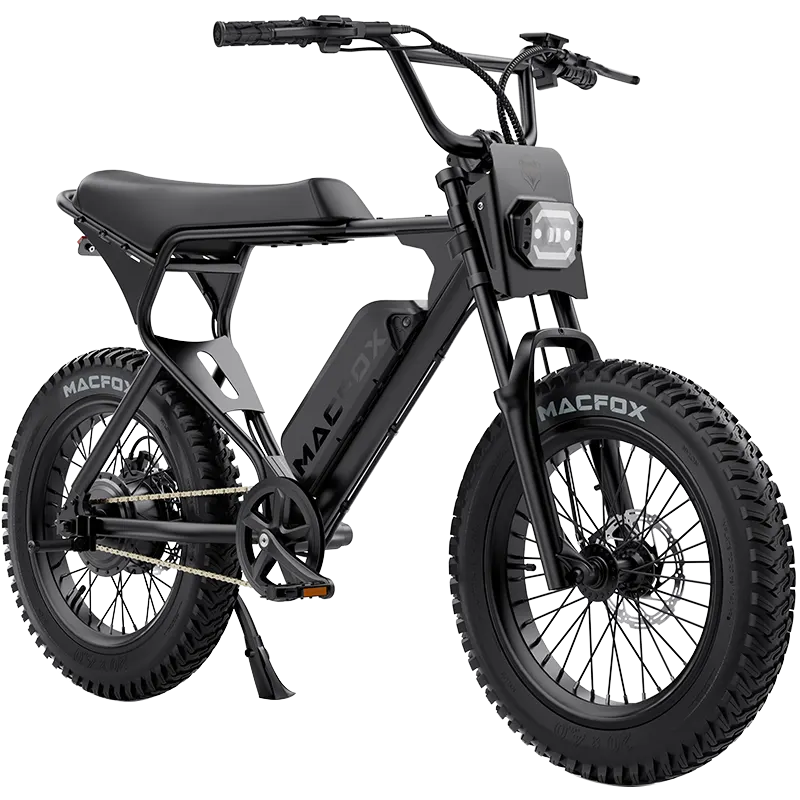
Macfox X1S
For riders who like the long-seat look but want to stay closer to a factory e-bike ownership path than a Sur-Ron-style electric dirt bike.
- Compact moto-inspired style
- Check exact class and settings
- Avoid unlocking beyond the legal lane
Trying to choose between legal, fast, and useful?
Use the buyer guides before paying for a bike that looks fun online but becomes a headache on local paths.
Email updates
Want Connecticut e-bike law and buyer updates?
Connecticut’s rules are changing faster than a teenager’s throttle setting. Get practical updates when laws, trail access, safety rules, or useful commuter-bike picks change.
Get Connecticut e-bike alerts.
Useful updates only: law notes, buyer guides, and bikes that fit the commute better than “the seller said it was legal.”
No spam. Just RideStreetLegal updates, buyer guidance, and law-change notes. Unsubscribe anytime.
Already own one?
Gear helps. It does not change the category.
Helmet
Wear a real helmet
Connecticut requires e-bike helmet use. Faster bikes deserve more protection than the cheapest foam bowl on the shelf.
Lights
Headlight, rear reflector, and side visibility
Connecticut requires lighting and reflector equipment when riding during required times and conditions.
Lock
Use a serious lock
E-bikes are easy to want and easier to steal. Use a stronger lock than the cable you found in a junk drawer.
Disclosure: RideStreetLegal may earn from qualifying purchases through some links at no additional cost to you. Safety equipment and accessories do not change the legal classification of the bike.
FAQ
Connecticut e-bike law questions.
Are e-bikes legal in Connecticut?
Yes. Connecticut treats qualifying electric bicycles much like bicycles, but the bike has to meet the state definition and the rider still has to follow class, helmet, equipment, trail, sidewalk, and local rules.
What are Connecticut Class 1, Class 2, and Class 3 e-bikes?
Class 1 is pedal assist up to 20 mph, Class 2 can use motor power up to 20 mph, and Class 3 is pedal assist up to 28 mph. Manufacturers must label class, maximum speed, and motor wattage.
Do Connecticut e-bike riders need helmets?
Yes. Connecticut law requires riders and passengers on electric bicycles to wear qualifying bicycle helmets.
Can a 15-year-old ride a Class 3 e-bike in Connecticut?
No. Connecticut law says no person under age 16 may ride a Class 3 electric bicycle, although a younger passenger may ride on a Class 3 e-bike designed to carry a passenger.
Do Connecticut e-bikes need registration or a driver license?
Qualifying Class 1, Class 2, and Class 3 e-bikes generally do not need DMV registration or a driver license. Motor-driven cycles and motorcycles are different categories.
Can Class 3 e-bikes use Connecticut bike trails?
Generally no. Connecticut law says Class 3 electric bicycles may not be ridden on bicycle trails, bicycle paths, multiuse trails, or multiuse paths.
Are high-powered throttle bikes still e-bikes in Connecticut?
Not necessarily. Connecticut’s 2025 law says a vehicle is not an e-bike if it fails the e-bike definition, has a throttle mode that can exceed 20 mph on motor power alone, or is designed or modified to stop meeting the e-bike definition.
Is a Sur-Ron legal as an e-bike in Connecticut?
Usually no. A stock Sur-Ron-style electric dirt bike generally falls outside Connecticut’s e-bike category and should be researched as a motor-driven cycle, motorcycle, off-road machine, or private-property vehicle instead.
Official and product references
Sources for the Connecticut legal framework.
- Public Act 25-159 — Connecticut electric bicycle, scooter, and motor-driven cycle updates
- Connecticut Office of Legislative Research — State Motor Scooter Registration and Licensing Requirements
- Connecticut General Statutes Chapter 248 — bicycle, e-bike, e-scooter, and motor-driven cycle roadway rules
- Connecticut State Parks and Forests — trail and motorized trail policies
- Connecticut DEEP — eBike incentive program and eligible e-bike safety criteria
- Ride1Up Roadster V3 product page
- Ride1Up Portola product page
- Macfox X1S product page